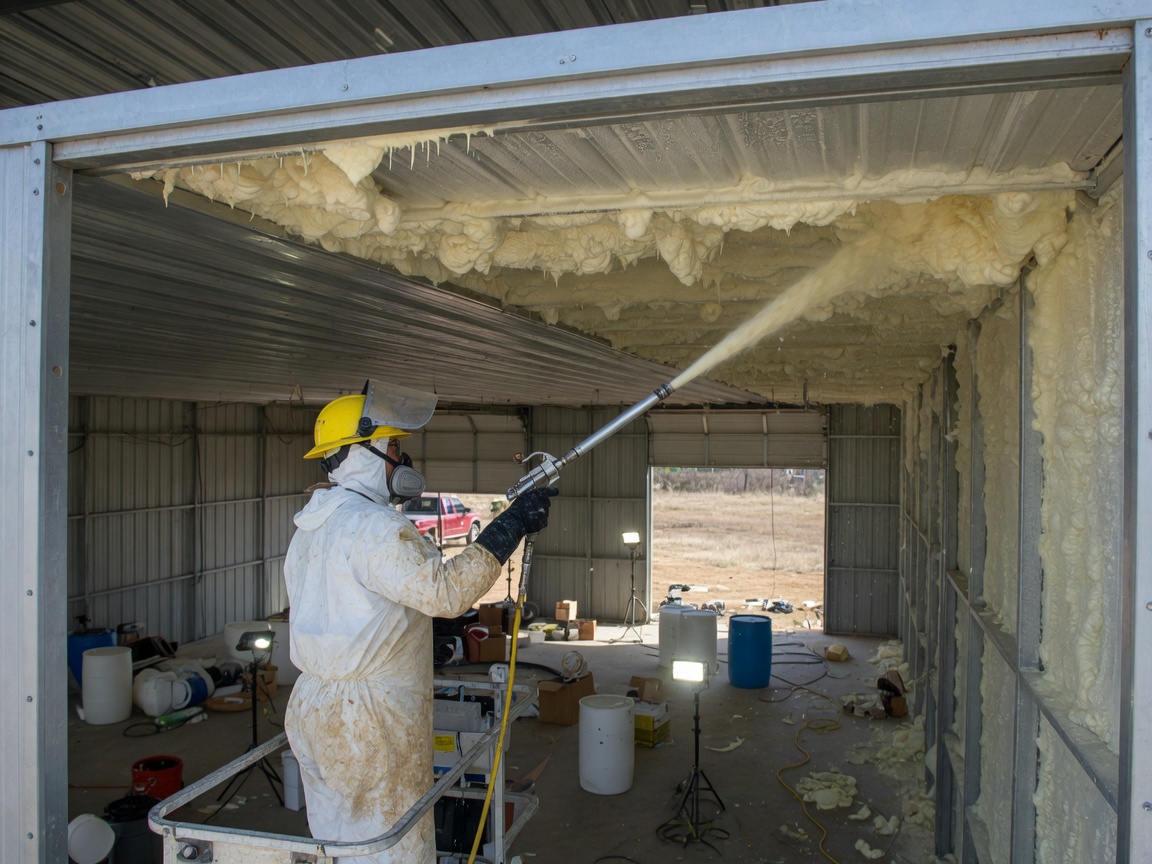
Metal buildings in Sand Springs face constant thermal bridging and condensation because steel conducts heat rapidly in the humid subtropical climate. Hot summers drive interior moisture toward cooler roof decks while mild winters allow dew points to form inside walls near Keystone Lake. Closed cell spray foam adheres directly to metal panels, creating an air and vapor barrier that stops corrosion and reduces energy loss in structures common to Prattville and Sand Springs Heights.
Application requires prepping the metal surface to remove oils and rust before spraying 2 to 3 inches of closed cell foam on roofs and walls. Open cell foam is often used on interior partitions where sound control matters more than structural rigidity. Crews must account for seasonal expansion joints in metal buildings around Sapulpa and Mannford to prevent cracking as temperatures swing.
Edge cases include older agricultural buildings with corrugated panels that flex under wind loads from Keystone Lake storms. Foam must be applied in lifts no thicker than two inches per pass to avoid overheating the metal and causing delamination. Local building codes in Tulsa County require ignition barriers over exposed foam in occupied spaces.
Proper ventilation planning prevents trapped moisture between foam and metal, a common failure point when contractors skip surface prep on buildings exposed to high humidity. Sand Springs Spray Foam Insulation Heroes works from 8635 W 21st St with crews familiar with these conditions.
Technician insight
In Sand Springs the thing that catches most people out with metal building spray foam is skipping surface prep on older corrugated panels near Keystone Lake. Humidity from the lake keeps driving condensation even after foam is installed if rust and oils remain under the coating.
Prattville metal shop condensation fix
Owner reported water dripping from roof deck onto equipment each morning. Inspection showed thin dew forming on uninsulated steel panels. Crew prepped the surface and applied two inches of closed cell foam across the roof and upper walls. Dripping stopped and interior temperatures stabilized.
Metal Building Spray Foam Insulation Services We Offer
✓Closed Cell Spray Foam for Metal Roofs
High-density closed cell foam applied to interior roof decks to stop condensation and strengthen panels against wind uplift common near Keystone Lake.
✓Open Cell Spray Foam for Metal Walls
Lower-density open cell foam fills wall cavities in metal buildings for sound dampening and air sealing without adding excessive weight to older structures.
✓Vapor Barrier Integration
Spray foam combined with targeted vapor retarders on metal surfaces to manage humidity levels in agricultural and commercial buildings throughout Prattville.
✓Agricultural Metal Barn Insulation
Specialized application for livestock and equipment barns where ammonia and moisture demand durable closed cell foam that resists degradation.
✓Condensation Control in Metal Structures
Targeted foam placement at roof-to-wall transitions and around fasteners to eliminate drip points that rust metal and damage stored goods in Sand Springs Heights.
Metal Building Spray Foam Insulation Cost in Sand Springs, OK
| Service | Typical Range | What Affects It |
|---|---|---|
| Closed cell roof application | $1.80–$2.60 per sq ft | Varies with thickness and roof height |
| Open cell wall application | $1.10–$1.60 per sq ft | Lower cost for interior partitions |
| Vapor barrier add-on | $0.35–$0.55 per sq ft | Required in high-humidity barns |
| Site prep and rust treatment | $400–$900 | Depends on panel condition |
Ranges are typical for Sand Springs, OK and confirmed with an exact written quote before any work starts.
How it works
- 1
Site Assessment
Technician inspects metal panels, checks for existing rust, measures square footage, and notes ventilation needs based on building use and proximity to Keystone Lake.
- 2
Surface Preparation
Remove loose rust, oils, and debris from interior metal surfaces to ensure proper adhesion before any foam is applied.
- 3
Foam Application
Spray closed or open cell foam in controlled lifts, maintaining proper temperature and thickness while working around seams and penetrations.
- 4
Final Inspection and Cleanup
Verify uniform coverage, trim excess foam, and confirm ventilation paths remain clear before leaving the site.
Pricing
Pricing depends on building size, foam thickness, and access conditions. Quotes are provided after on-site assessment.