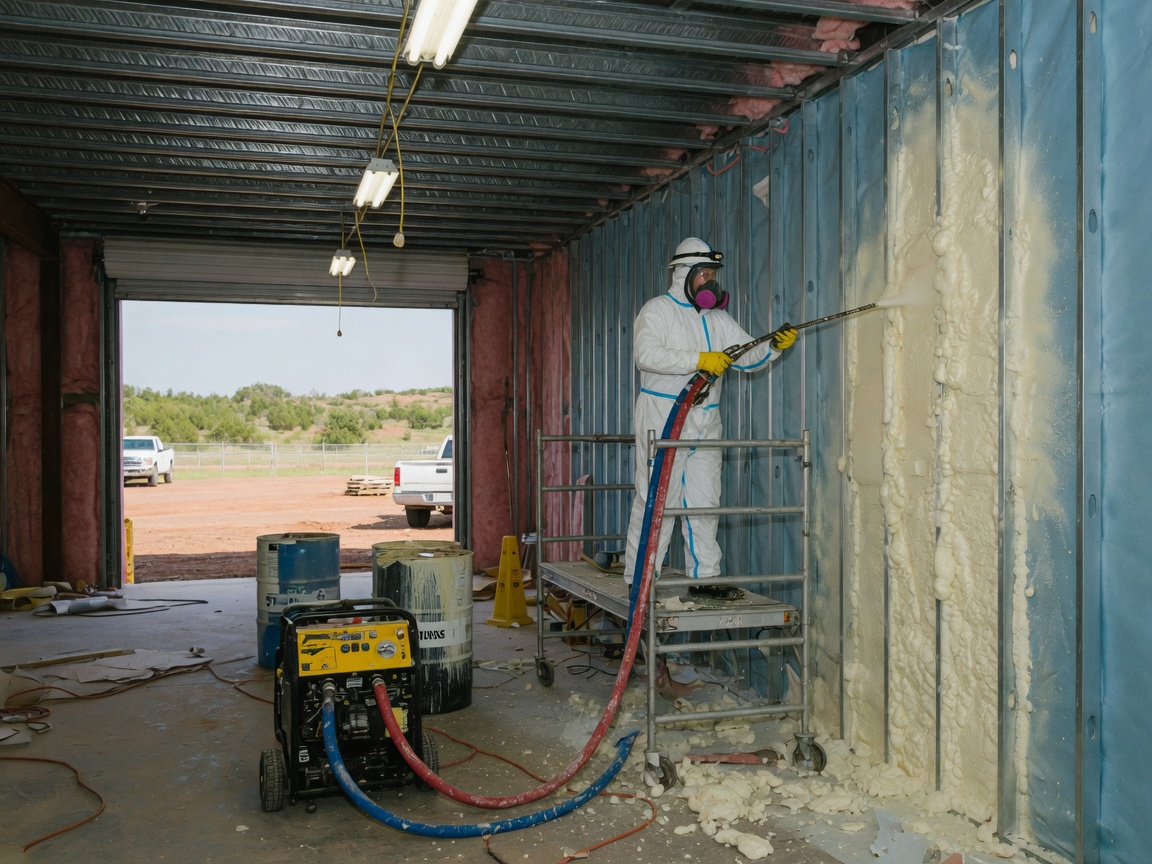
Tulsa homes west of downtown often sit on smaller lots with mature trees and older brick or frame construction from the 1920s through 1960s. Spray foam insulation crews from Sand Springs reach these properties quickly via 21st Street and Highway 412, allowing same-day prep work before afternoon humidity builds. Closed-cell foam seals the irregular wall cavities common in Maple Ridge and Brookside bungalows while adding rigidity to aging joists.
Hot summers push attic temperatures well above 120 degrees in west Tulsa neighborhoods, driving up cooling loads. Open-cell spray foam applied to rafters reduces heat transfer without trapping moisture against the decking, a practical choice given the area's frequent summer storms. Crews time attic work for early morning hours to avoid peak heat and roof deck condensation issues.
Winters stay mild but still bring occasional cold snaps that push through single-pane windows in older Tulsa stock. Rim-joist and crawl-space applications block the air leaks that pull chilled air up from the ground near the river bottoms, keeping utility bills steadier without major structural changes to the home.
Around Tulsa
We regularly work near:
- 📍Gathering Place
- 📍Tulsa Zoo
- 📍Philbrook Museum of Art
- 📍Woodward Park
- 📍Route 66 Historical Village
- 📍Tulsa Air and Space Museum
Sand Springs Spray Foam Insulation in Tulsa — Local Notes
- •West Tulsa lots near the river often have shallow crawl spaces with periodic moisture; closed-cell foam on the rim and subfloor creates a vapor barrier that holds up to local drainage patterns.
- •Many 1940s-1960s frame homes along 11th Street and Edison have balloon framing with open wall cavities; dense-pack open-cell foam fills these voids without removing original plaster or siding.
- •Mature oak and pecan trees around properties like those near Woodward Park drop heavy leaf litter that can clog gutters; spray foam attic seals limit warm moist air reaching the roof deck where it could mix with debris and cause rot.
- •Access to homes off Southwest Boulevard or 33rd West Avenue is straightforward from the Sand Springs shop, letting crews bring trailer-mounted rigs without crossing heavy downtown traffic.